

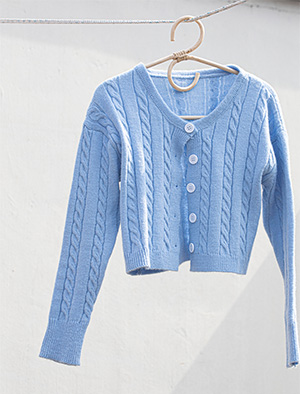
 For this journey, let’s imagine our item is a powder blue knit sweater with shiny pearl-like buttons. The original owner took great care of it, always following the washing instructions and making sure it never got stained or snagged. But over time, the sweater begins to show signs of wear, and eventually, it no longer fits for one reason or another.
Faced with a decision, the owner tosses it in the garbage, thinking, “Who would want this old, worn-out sweater anyway?”
Life in a Landfill
Now, that once-loved powder blue sweater sits in a landfill, next to piles of other unwanted items that people threw out with yesterday’s newspaper and the rotting fruit from their fridge. From here, it could take up to 200 years for the knit fabric of the sweater to break down. But that time is double, potentially triple, for those shiny pearl-like buttons that are most likely made of hard plastic.
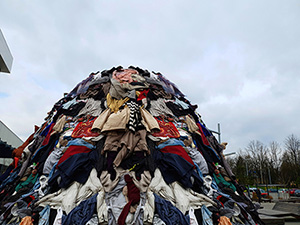 With 8 billion tons of trash already on the planet, we’re consuming far too quickly to wait hundreds of years for waste to decompose. Right now, our consumption rate is outpacing decomposition at a scary speed.
But that’s not even the worst part: garments left to decompose in landfills release large amounts of harmful CO2 gases that contribute significantly to climate change. This means that every piece of clothing we throw away adds to the growing environmental crisis.
Life in the Incinerator
Contrary to popular belief, not all trash goes to a landfill. Some garbage is brought to Waste-To-Energy plants, where clothing and other non-recyclable waste is burned to create various forms of energy, such as electricity, heat, and fuel.
 Burning trash to create energy sounds like a win-win situation, but that isn’t the whole picture. Harmful environmental gases are still created during this process—sometimes at an even more aggressive rate than a landfill’s emissions. Plus, these Waste-to-energy facilities aren’t always safe for the surrounding wildlife population the site is built near.
Finally, these facilities are expensive to build and maintain, and the burning process is also expensive. This means we’re not just paying an environmental cost but a large monetary one, too. Imagine your tax-payer dollars going towards burning a beautiful powder blue sweater that someone could’ve and would’ve loved.

Let’s imagine now a happier ending for our fictional powder blue sweater. Donation is the best option for most unwanted clothing, shoes, electronics, or household items. Here is the typical lifecycle of a donated item.
 Decluttered & Donated
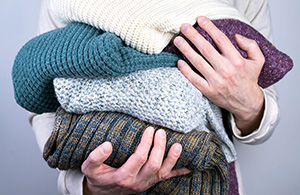
Decluttering is the practice of sorting through your belongings and deciding what to keep and what you’re ready to let go. During this process, you’ll often find items that no longer fit your space or your life—maybe a kitchen appliance you don’t use anymore or a once-beloved powder blue sweater with pearl-like buttons that no longer fits.
At this point, you have a choice: dump it or donate it. In this case, the person decluttering chose to donate. They took the sweater from the closet, added it to a bag with other clothing, and dropped it off at a donation bin. Once the bag is in the bin, the items remain safe and dry until a team member from the donation organization collects them for sorting and redistribution.
 Donated Item Sorting
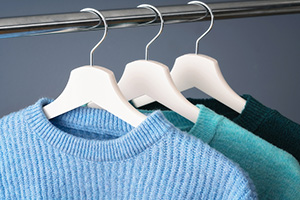
Once items are retrieved from donation bins, they are taken to a distribution center, where they are sorted and prepared for the next stage of their second-hand journey. Some items are labeled for resale at thrift shops, while others may be set aside for direct donation to those in need.
Items arrive at the distribution center in a range of conditions, from nearly new to well-worn. But no matter how used an item is, you should never feel ashamed to donate it. Even if it can’t be resold or donated as is, it may still be repurposed. For instance, electronics can often be broken down for parts, and clothing can be recycled into textiles.
Resale & Upcycling
The beauty of donating and buying second-hand is that many items never need to end up in a landfill. As one person outgrows or tires of an item, it can be passed on for someone else to love and appreciate, potentially making the final phase of a donated item’s lifecycle endless.
But this cycle only works if we commit to regularly decluttering, donating, and limiting new purchases to when they’re truly necessary. When we do need something, opting for second-hand whenever possible keeps the cycle going.
Take that blue sweater again. Instead of sitting in a landfill, it could end up in a thrift shop where a single mom on a budget buys it, making it a staple in her wardrobe for years. Or maybe a teenager purchases it with their allowance and transforms it by embroidering daisies, giving the sweater a fresh new look. This reimagining of the item is known as upcycling—a common practice both before and after resale.
Regardless of where it goes afterward, when an item is donated, its lifespan is extended, and the possibilities for its future are limitless.

Donation Containers Are More Convenient
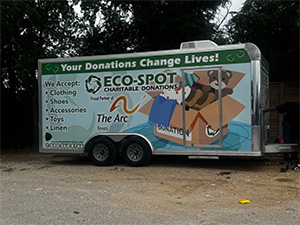
When you’re ready to donate items, you don’t want them sitting in your house or the back of your car for months on end. Ideally, you want them boxed or bagged up and donated as quickly as possible so you can move on with your other priorities. That’s where Eco-Spot Donation Bins come in handy. With hundreds of clothing drop-off bins across Texas, Missouri, and Utah, it’s easy to find a location near you.
Plus, at Eco-Spot Donation Bins, there’s no fuss when it comes to dropping items off. They’re available 24/7, and because most Eco-Spot locations are self-serve, there are never any crazy lines or long waits, which makes donations quick and easy.
Local Community Support
Eco-Spot proudly partners with local non-profits in Texas, Missouri, and Utah that are committed to improving their communities and making a positive impact. Through these partnerships, we’re able to extend our reach and support more people, ensuring that donated items find new homes while promoting sustainability. Together, we’re working to create a future where fewer things are wasted.
By collaborating with these organizations, we’re not just keeping clothes and other donated items out of landfills—we’re helping to strengthen local economies, provide affordable resources, and encourage responsible consumption. Whether it’s clothing, electronics, or household goods, every donation has the potential to make a difference, and by partnering with groups that share our vision, we can help create lasting change in the communities we serve.
 Tax Deduction on Donated Items
That’s right—donating unwanted items can lead to valuable tax write-offs! When you donate through Eco-Spot, you can take advantage of this benefit by following a simple process. Just download the Eco-Spot Donations Receipt from our website and fill it out before dropping off your items at one of our convenient donation bins.
Once you’ve completed the receipt, keep it in a safe place so you can easily access it when tax season arrives. Not only will you be decluttering your space and supporting your community, but you’ll also be making a smart financial decision.
 It’s important to remember that the value of your donations can add up, especially if you’re contributing clothing, electronics, or household goods. To maximize your write-off, consider documenting the items you donate, including their condition and estimated value. This way, you can provide accurate information if needed during tax preparation. Donating not only helps others but can also lighten your tax burden, making it a win-win situation!

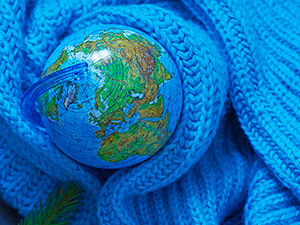 Let’s revisit the powder blue knit sweater one last time. While it was a fictional example to illustrate the importance of donations, the reality is that every day, countless individuals are discarding clothing and household items that could be given a second life through donation. This practice contributes to an overwhelming amount of waste, and we simply can’t afford to keep down this path.
It’s up to each of us to play our part in combating fast consumerism and its detrimental effects on the environment. By choosing to donate unwanted items instead of throwing them away, we can collectively make a significant impact. Each item we donate has the potential to enrich someone else’s life, reduce landfill waste, and promote a more sustainable way of living.
As we embrace a culture of giving and recycling, we can slow down the cycle of consumption and encourage responsible habits in ourselves and our communities. So, the next time you’re ready to declutter, remember the journey of that powder blue sweater and the countless others like it. Take a moment to consider how your donations can create a ripple effect of positive change, helping not just your community but the planet as a whole. Together, we can foster a brighter, more sustainable future, one donation at a time.
